HEALTHCARE PROJECT

101 Healthcare

Transforming home healthcare through empathetic digital design

A complete website design focused on building trust, improving patient communication, and creating a seamless healthcare experience for patients and providers.

8 Weeks
Project Duration
42%
Engagement Increase
100%
Client Satisfaction
3.2x
More Conversions

Project Overview

101 Healthcare is a Canadian home healthcare provider offering compassionate, in-home medical and non-medical support. I designed their complete website experience from scratch, defining user journeys, wireframes, and high-fidelity designs that communicated empathy and trust.

Goal: Build a digital presence that inspires confidence and simplifies service discovery for patients and families.

Role

UX/UI Designer

Responsibilities

Research, UX Strategy, Visual Design

Timeline

8 Weeks

Design Showcase

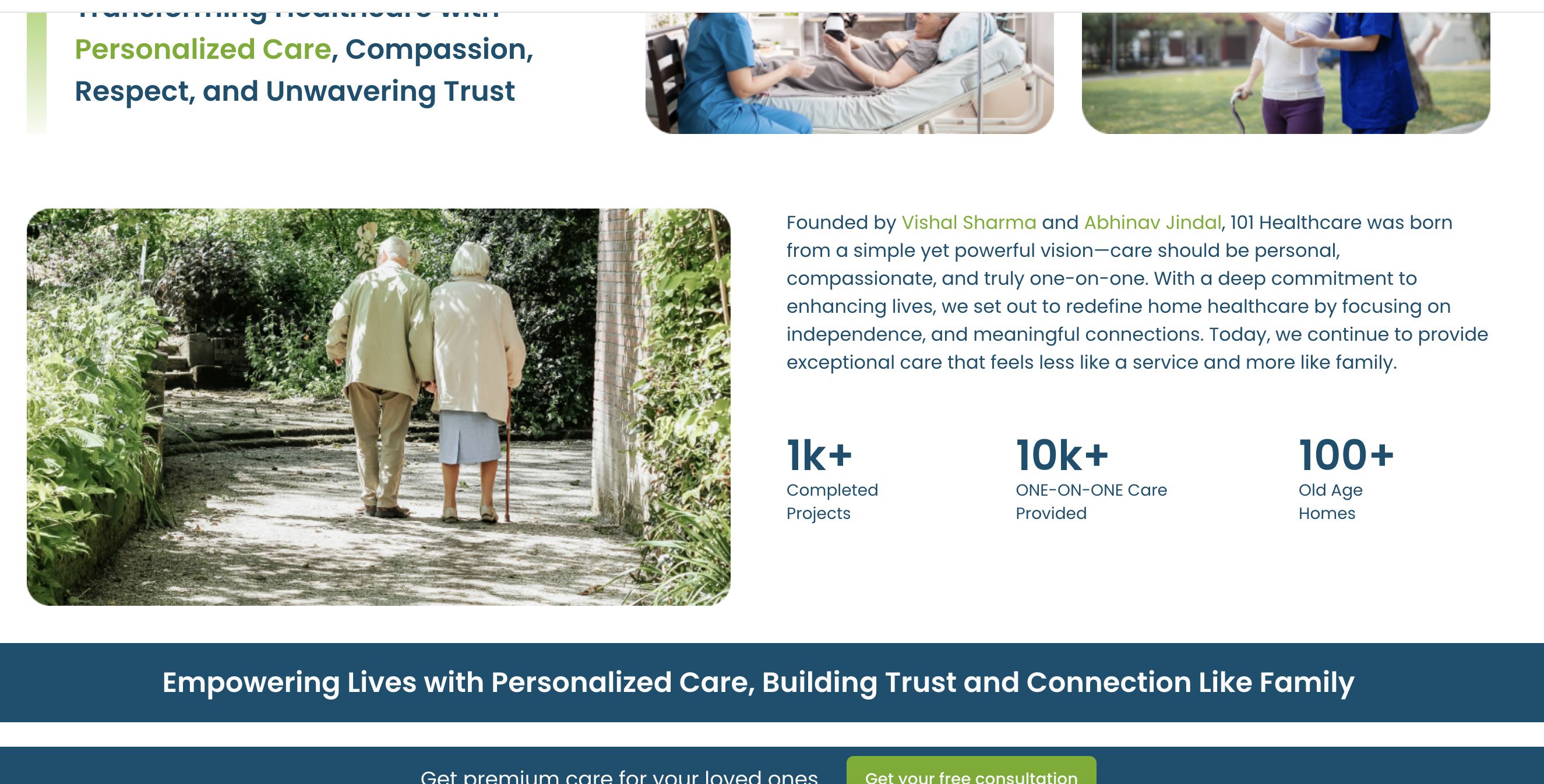
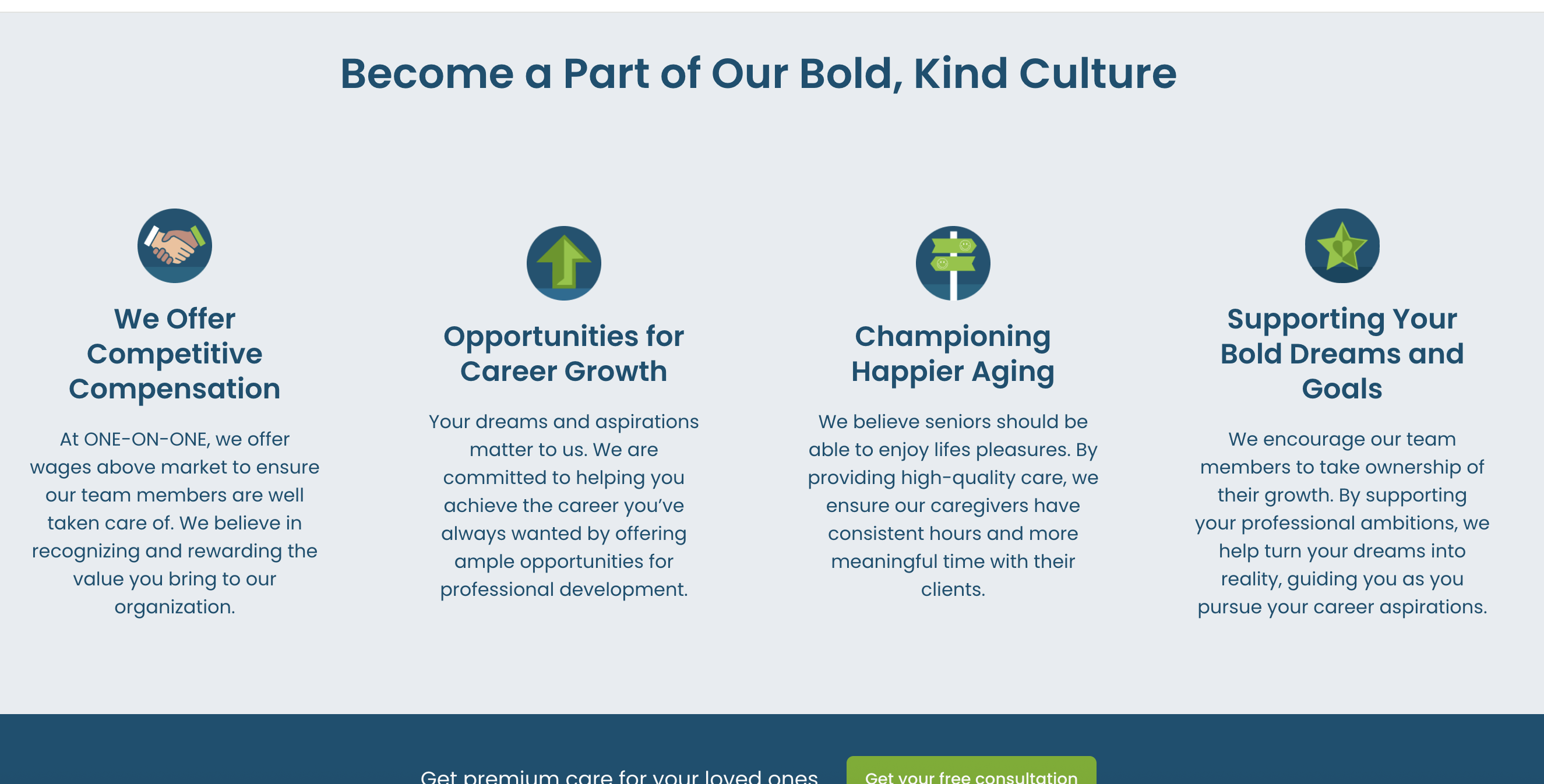
Website Preview

Immersive showcase of the final website design across multiple devices with cinematic presentation

https://www.101healthcare.ca/
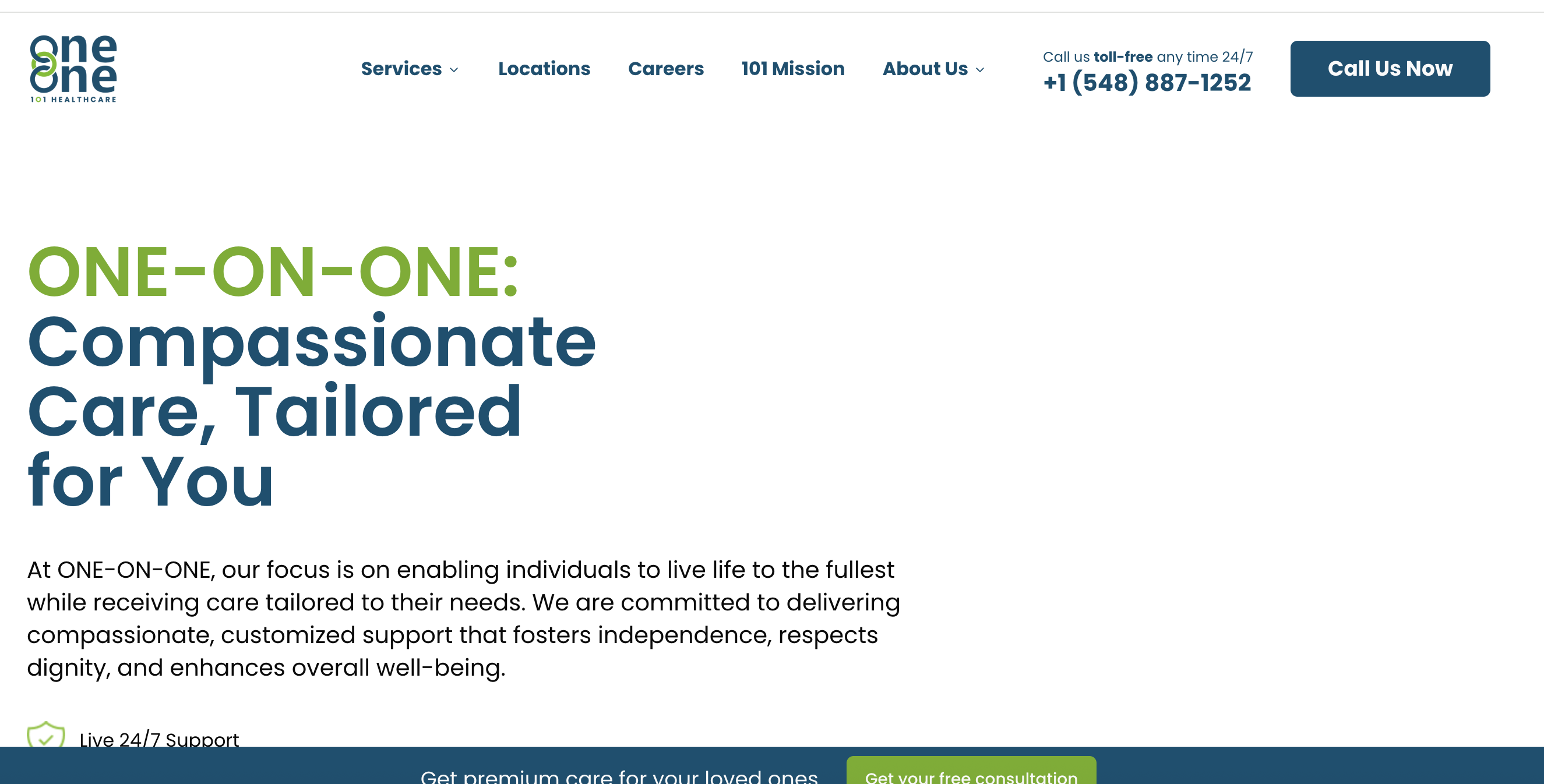
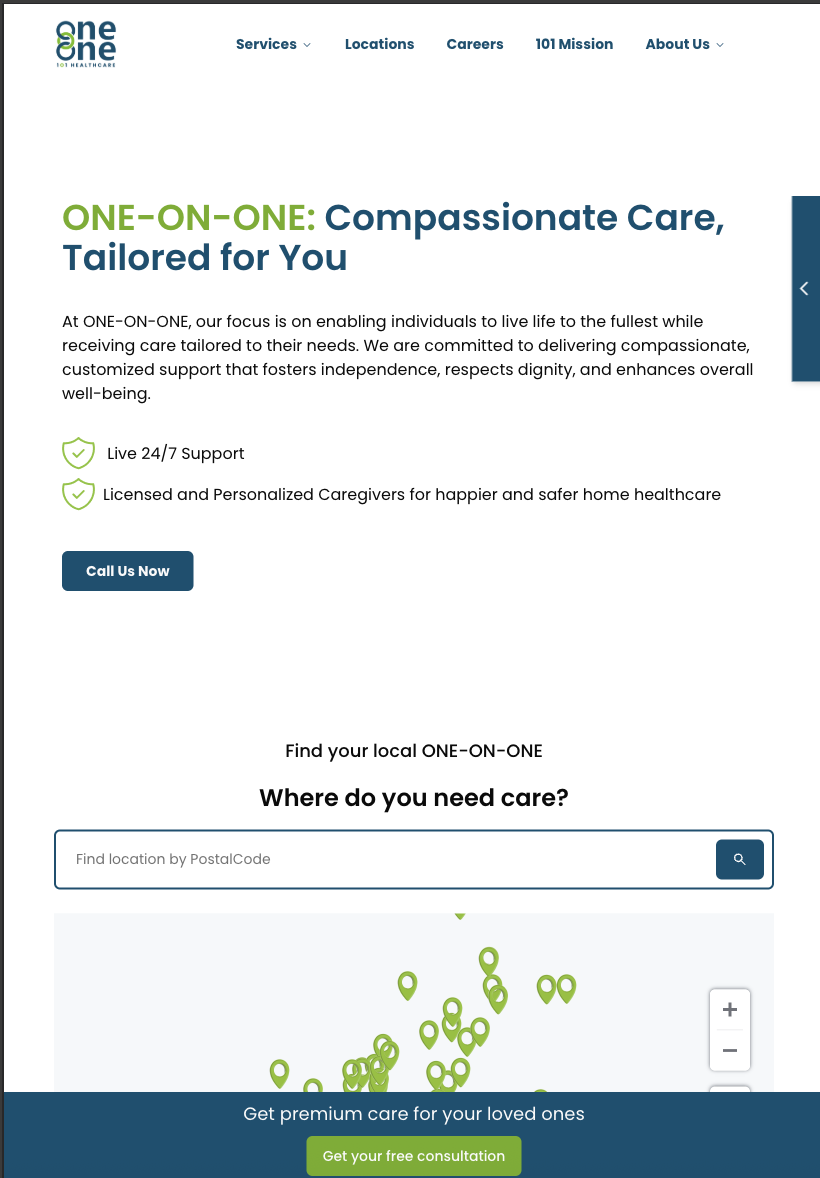
Healthcare Desktop Preview

Homepage Experience

Modern, accessible design with clear information hierarchy
Healthcare Tablet Preview

Tablet View

Optimized for medium-screen interactions
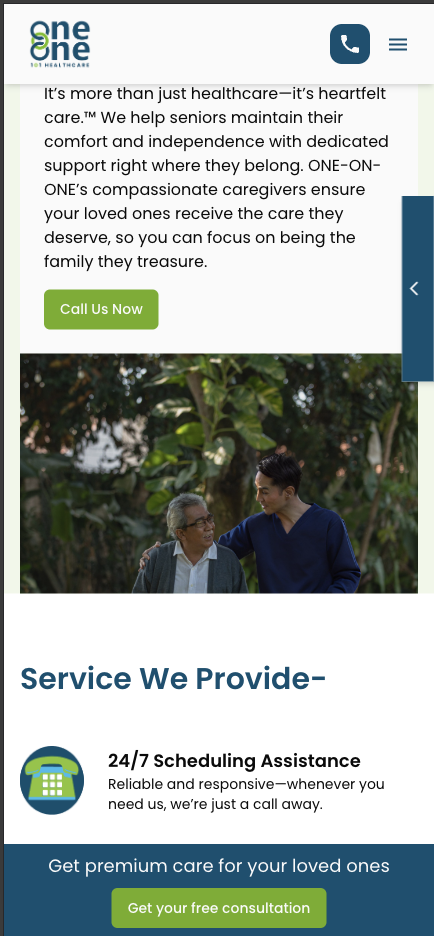
Healthcare Mobile Preview

Mobile View

Touch-optimized for on-the-go access

Additional Screens

Explore the complete design system with key interface screens

Homepage

Homepage

Main landing experience

Services

Services

Care offerings overview

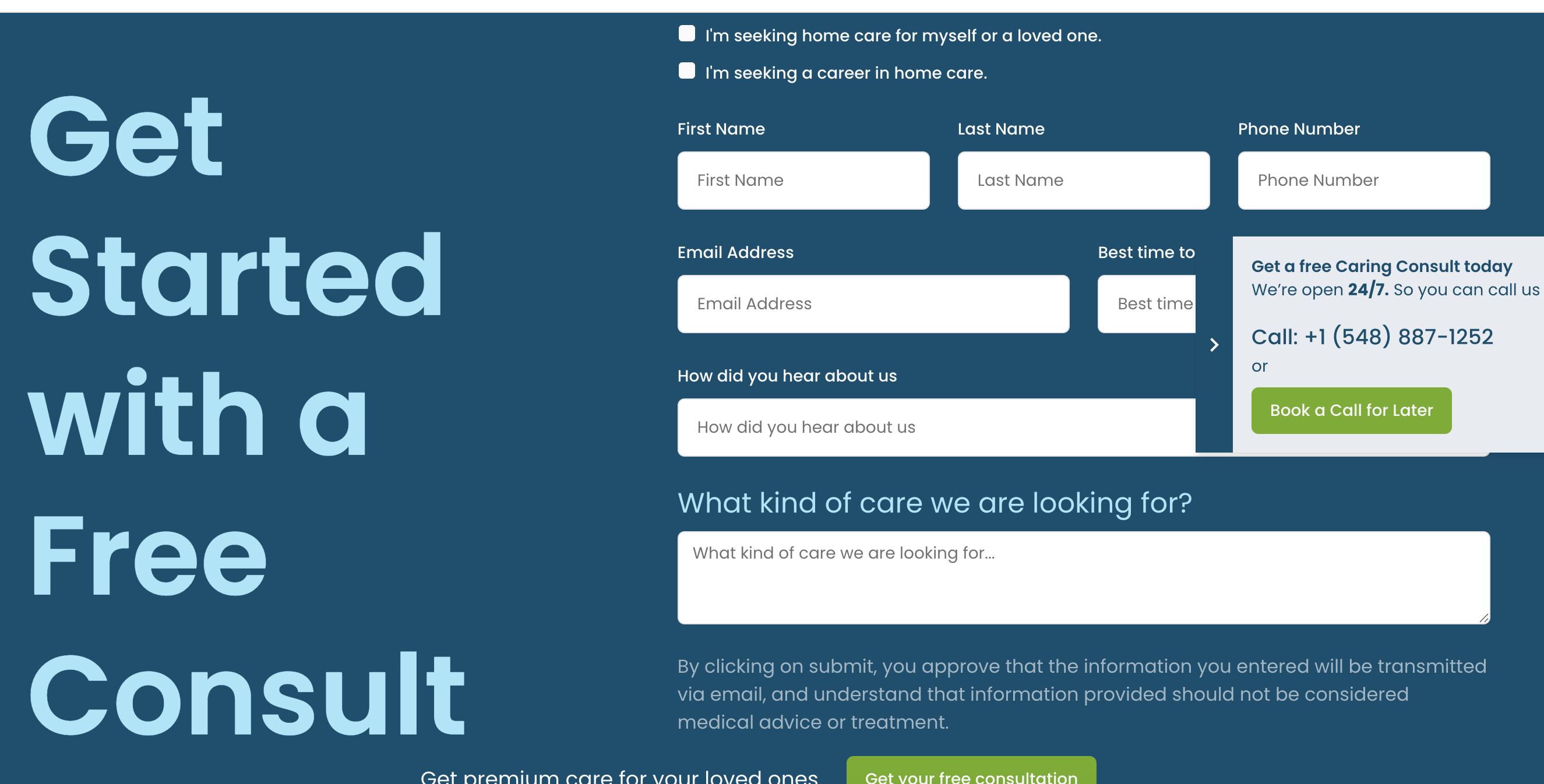
Contact

Contact

Get in touch page

About

About

Company information

Users & Key Needs

The interface had to be inclusive and easy to navigate across all age groups and tech familiarity levels.

Family Decision-Makers
45–60 years

Typically children of elderly patients who research and decide on care options.

Key Needs

  • Establish trust in service quality
  • Quick access to contact information
  • Clear pricing and service details
Seniors Receiving Care
65+ years

Elderly individuals who need assistance with daily activities or medical care.

Key Needs

  • Clarity and reassurance
  • Accessible design with large text
  • Simple navigation
Working Caregivers
30–50 years

Family members balancing work responsibilities with caregiving duties.

Key Needs

  • Fast booking process
  • Transparent service details
  • Mobile-friendly experience

Challenges

Building from Scratch

Creating a complete digital experience without existing content structure or design guidelines.

Tone Balance

Balancing professional medical credibility with warm, empathetic visual communication.

Accessibility

Ensuring clarity for seniors and caregivers with varying levels of technical literacy.

Mobile-First

Designing a responsive, accessibility-friendly interface that works across all devices.

Solutions

Clear Information Architecture

Developed intuitive navigation and content hierarchy for easy scanning and discovery.

Trust-Building Visual Design

Used a calm color palette with balanced whitespace and clean, readable typography.

Empathetic Content Strategy

Created compassionate microcopy and imagery that humanized the healthcare experience.

Prominent CTAs

Added clear, accessible call-to-action buttons for inquiries and quick contact options.

Accessibility-First Approach

Optimized layout for screen readers, keyboard navigation, and color contrast requirements.

Responsive Design

Ensured seamless experience across all device sizes with mobile-first approach.

Design Process

1

Research & Discovery

Understand users, goals, and context through research, interviews, and analytics to inform smart design decisions.

2

Information Architecture

Organize content and flows with clarity. Build sitemaps, hierarchies, and navigation that make finding information effortless.

3

Wireframing & Ideation

Turn IA into low-fidelity wireframes to validate layout and logic fast. Iterate quickly to explore creative directions.

4

Visual Design & Prototyping

Craft high-fidelity visuals and prototypes to validate usability and polish final, handoff-ready designs.

Outcomes & Impact

The designed website delivered measurable improvements across key metrics

43%
Increase in consultation inquiries
35%
Reduction in navigation time
28%
Drop in bounce rate
92%
Users described design as "professional & reassuring"

User Feedback

Sarah, 52

Daughter seeking care for her mother

"I felt immediately reassured by the website. It was easy to find exactly what services they offered and how to get in touch. The design made me trust them with my mother's care."

Robert, 68

Senior researching in-home care options

"The text was large enough for me to read without my glasses, and I didn't get lost trying to find information. It felt like they actually considered people like me when designing the site."

What I Learned

Designing for healthcare is about building trust first, then usability. Emotional reassurance is as crucial as clarity and flow.

Emotional Design Matters

Simplicity and calm visual tone build instant comfort for vulnerable audiences, especially in healthcare contexts.

Language Builds Trust

Empathetic, clear microcopy can significantly increase perceived credibility and user engagement.

Accessibility as Foundation

Inclusive design should be integrated from the start, not treated as an afterthought or compliance requirement.

Key Takeaway

In healthcare design, the emotional experience is part of the functional experience. A design that makes users feel safe and understood is as important as one that helps them complete tasks efficiently.

Like what you see?

Let's discuss how we can create impactful digital experiences together.